How to Declutter Your Entire House in a Weekend is an exciting challenge that opens the door to a fresh start and revitalized living space. Embracing this transformation not only enhances the aesthetic appeal of your home but also brings mental clarity and peace. This guide will equip you with the essential strategies and techniques needed to efficiently tackle the daunting task of decluttering, turning your weekend into a productive journey of organization and renewal.
As you prepare to embark on this transformative quest, it is crucial to understand the mindset and planning required for success. By setting clear goals, creating a structured plan, and applying effective decluttering techniques, you will be able to make significant progress in a short amount of time. Let’s explore the steps necessary to reclaim your space and achieve a clutter-free home.
Setting the Stage for Decluttering
Embarking on a decluttering journey requires not only physical readiness but also mental preparation. The process of clearing out your space can be overwhelming, yet with the right mindset and environment, it can transform into a fulfilling weekend project. Establishing clear goals and timelines is essential to make the most out of your decluttering experience.Creating a motivating environment is crucial in fostering a positive attitude toward the decluttering process.
A disorganized space can lead to feelings of stress and anxiety, which may hinder your efforts. Begin by selecting a dedicated area for your decluttering activities. Ensure that this space is well-lit and free from distractions, allowing you to concentrate solely on the task at hand. Consider playing upbeat music or inspiring podcasts to uplift your spirits during the process.
Mental Preparation for Decluttering
Mental readiness plays a significant role in the success of your decluttering mission. Cultivating a mindset focused on progress rather than perfection can greatly reduce the anxiety associated with the task. Here are several strategies to help you prepare mentally:
- Visualize Your Goals: Spend a few moments imagining how your home will look and feel once you have decluttered. This visualization can serve as a powerful motivator.
- Practice Mindfulness: Taking a few deep breaths and centering your thoughts can help calm any feelings of overwhelm before you start. Mindfulness practices can create a sense of peace that is conducive to decluttering.
- Adopt a Positive Mindset: Remind yourself of the benefits of decluttering, such as increased space and reduced stress. Keeping these positive outcomes in mind can fuel your motivation.
Establishing specific goals and timelines for the weekend is fundamental in maintaining focus throughout the decluttering process. By setting realistic objectives, you can track your progress and celebrate small victories along the way. For instance, consider segmenting your decluttering into manageable tasks, such as focusing on one room or area at a time.
“Goals are dreams with deadlines.”
Diana Scharf Hunt
Additionally, assigning time limits to each task can enhance productivity. Below are some examples of how to structure your goals and timelines effectively:
- Identify Key Areas: Create a list of rooms or spaces in your home that require decluttering, prioritizing them based on need.
- Allocate Time Blocks: Assign specific time slots for each area, ensuring that you allow breaks to prevent burnout.
- Set Final Milestones: Establish a completion time for the entire process to maintain momentum and focus throughout the weekend.
Creating a Decluttering Plan
Establishing a thorough decluttering plan is essential for a successful and efficient decluttering process. By taking the time to craft a strategic approach, you can ensure that every area of your home is addressed, making the task less daunting and more organized. A well-structured plan will help you maximize your efforts and minimize wasted time, allowing you to experience a sense of accomplishment by the end of the weekend.To create a structured decluttering plan, it is important to identify key areas within your home that require immediate attention.
This prioritization will provide focus and direction, ensuring that your efforts yield significant results. Furthermore, breaking down the decluttering tasks into manageable sections will make the process feel less overwhelming, allowing you to work systematically through each room.
Prioritizing Areas of the House
Identifying which areas of your home to prioritize involves considering both functionality and emotional impact. Certain spaces may require more urgent decluttering due to their daily use or the clutter’s effect on your mental state. The following categories can help guide this prioritization:
- High-Traffic Areas: Focus on rooms like the living room, kitchen, and bathroom, where clutter can disrupt daily activities.
- Storage Spaces: Address areas such as attics, basements, and garages that often serve as catch-alls for unused items.
- Sentimental Spaces: Consider areas that hold emotional significance, where clutter may be preventing you from enjoying the space.
- Guest Areas: Prioritize bedrooms or guest spaces to ensure a welcoming environment for visitors.
Breaking Down Tasks into Manageable Sections
To avoid feeling overwhelmed, breaking tasks into smaller, manageable sections is crucial. This allows for a sense of progress and achievement as you tackle each segment. Here are effective methods for breaking down your decluttering tasks:
- Room-by-Room Approach: Focus on decluttering one room at a time, ensuring complete organization before moving on to the next.
- Zoning: Within each room, create specific zones (e.g., closet, desk, shelves) to target distinct areas of clutter.
- Time Blocks: Allocate specific time frames for each task, such as dedicating one hour to declutter a closet or ten minutes to sort through mail.
- Categories of Items: Sort items into categories (e.g., keep, donate, toss) as you declutter, streamlining the decision-making process.
“Breaking tasks down into manageable sections not only makes decluttering less intimidating but also creates a clear pathway to achieving your goals.”
Decluttering Techniques

Effective decluttering requires the right techniques to help you streamline the process and make confident decisions about your possessions. Various methods can simplify the task, making it more manageable and even enjoyable. Understanding different strategies will equip you with the tools necessary for a successful decluttering experience.
Effective Decluttering Methods
When embarking on a decluttering journey, utilizing proven techniques can enhance your efficiency and effectiveness. Here are several well-known methods that can guide your decluttering efforts:
- Marie Kondo Method: This approach emphasizes keeping only those items that “spark joy.” The process involves categorizing items, starting with clothing, and working through categories in a specific order. It encourages a reflective mindset toward your belongings.
- Four-Box Method: This technique involves setting up four boxes labeled “Keep,” “Donate,” “Sell,” and “Throw Away.” As you sort through your items, place each object in the appropriate box, which helps to create a clear action plan for what to do next.
- Minimalist Game: This method involves decluttering a certain number of items corresponding to the day of the month (e.g., one item on the first day, two items on the second, etc.). This adds a challenge that can make the process fun and motivating.
- One-Year Rule: If you haven’t used an item in the past year, consider letting it go. This rule encourages you to assess the true value of items based on their utility.
- Room-by-Room Approach: Focus on one room at a time to avoid feeling overwhelmed. This method allows for concentrated effort and enables you to see progress quickly.
Deciding What to Keep, Donate, Sell, or Throw Away
Making decisions about your belongings can sometimes be the most challenging aspect of decluttering. Establishing clear criteria for what to retain or dispose of is essential. Here’s a guide to help you navigate this process:
- Usage Frequency: Assess how often you use each item. If you haven’t interacted with it in the last six months, it may be time to reconsider its place in your home.
- Condition of the Item: Evaluate whether the item is in good condition. If it’s damaged beyond repair, it’s best suited for the trash, whereas items in good condition can be donated or sold.
- Sentimental Value: Reflect on emotional attachments. While some items may hold sentimental value, it’s important to balance this with practicality. Consider photographing items with strong memories and letting the physical item go.
- Space and Storage: Examine your available space; if an item takes up too much room and is seldom used, it may be better to part with it.
- Potential for Resale: For items that are in demand and can fetch a reasonable price, consider selling them online or at a garage sale to maximize their value.
Setting Criteria for Item Retention
Creating a structured guide for setting criteria can streamline your decision-making process. Here are several factors to consider when evaluating whether to keep an item:
- Practical Utility: Ask yourself whether the item serves a purpose in your daily life. Items that enhance your day-to-day routine should be prioritized.
- Emotional Connection: Items that evoke positive memories can be meaningful, but it’s crucial to differentiate between those that truly enhance your life and those that may be kept out of guilt or obligation.
- Current Trends and Lifestyle: Reflect on how your lifestyle has changed over time. An item that once fit your lifestyle may no longer be relevant, prompting a reassessment.
- Duplicates: Identify if you have multiple versions of the same item. Keeping the best version is often more valuable than retaining all duplicates.
- Future Usage: Consider whether you foresee using the item in the near future. If there’s no clear plan for its use, it might be best to let it go.
“Simplicity is the ultimate sophistication.” – Leonardo da Vinci
Time Management Strategies

Effective time management is crucial for successfully decluttering your entire house in a weekend. The key to maintaining momentum and productivity lies in structuring your time wisely. By setting clear time allocations for each task and adhering to a focused schedule, you can make significant progress without feeling overwhelmed. Time management also allows for flexibility in your plan, ensuring that you can adapt as needed while still achieving your decluttering goals.
Focused Work Sessions and Breaks
Maximizing efficiency during your decluttering weekend involves employing structured work sessions interspersed with breaks. This approach not only enhances focus but also prevents burnout. Consider utilizing the Pomodoro Technique, which includes concentrated work intervals followed by short breaks. Here’s a guideline for setting up your work sessions:
- Set a Timer: Choose a duration of 25 minutes for focused work. During this time, concentrate solely on decluttering one area.
- Take a 5-Minute Break: Use this time to relax, stretch, or hydrate. This helps to recharge your mental energy.
- After Four Sessions: Take a longer break of 15-30 minutes. Use this time to step away from the decluttering process and refresh your mind.
Implementing this structured approach not only aids concentration but also makes the task feel more manageable. The brain can focus intensely for short periods, making these intervals highly productive.
Staying on Track and Avoiding Distractions
Maintaining focus during your decluttering weekend is essential to prevent distractions from derailing your progress. Here are strategies to help you stay on track:
- Define a Decluttering Space: Choose a specific area in your home as your decluttering zone. Keep this area free from distractions, such as electronic devices and unrelated clutter.
- Use a Checklist: Write down specific tasks or areas to tackle. Checking off completed tasks can provide motivation and a sense of accomplishment.
- Limit Multitasking: Focus solely on the decluttering task at hand. Multitasking can dilute your efforts and lead to inefficiency.
- Inform Housemates: Let others in your household know about your decluttering plans. This helps reduce interruptions and fosters a supportive environment.
By being intentional about your space and actions, you can create an atmosphere conducive to productivity, allowing you to make the most of your decluttering weekend.
Handling Sentimental Items

Sentimental items often carry a deep emotional significance, connecting us to cherished memories and loved ones. However, these attachments can make decluttering a challenging process. Effectively managing sentimental belongings involves a balance between honoring memories and maintaining an organized living space. By employing specific strategies, individuals can navigate the emotional landscape of decluttering while ensuring they keep what truly matters to them.
Approaches for Dealing with Emotional Significance
Managing items with emotional significance requires thoughtful consideration. Establishing a system for evaluating these possessions can help declutter without disregarding memories. Here are several strategies to consider:
- Establish a Memory Box: Designate a small box for sentimental items that truly hold significance. This curated collection can include letters, photographs, or small mementos, allowing for a tangible representation of cherished memories.
- Keep Only What Sparks Joy: Adopt the philosophy of retaining items that bring joy or serve a meaningful purpose. Reflect on each item’s emotional impact and ask whether it contributes positively to your current life.
- Share Stories: Instead of keeping every item, consider sharing the stories related to these belongings with friends or family. This practice can create a sense of connection without the need to retain the physical objects.
Strategies for Keeping Memories Without Physical Items
In the digital age, preserving memories can extend beyond physical keepsakes. Utilizing technology and creative methods can help maintain connections to the past while reducing clutter. Consider the following strategies:
- Photo Documentation: Take high-quality photographs of sentimental items you wish to let go of. Organize these images into digital albums or create a photo book that commemorates the memories associated with each item.
- Digital Journals: Maintain a digital journal where you document the significance of each sentimental item. Include stories, emotions, and memories that the item evokes, allowing you to preserve the essence of your experiences.
- Virtual Reality Memory Albums: Explore emerging technologies that allow you to create virtual reality experiences of your memories. This innovative approach lets you revisit moments with immersive storytelling.
Methods for Gently Letting Go of Sentimental Belongings
Letting go of items that hold sentimental value can be emotionally taxing. However, adopting gentle strategies can facilitate this process. Here are some methods to consider:
- Gradual Release: Start by letting go of less significant items before tackling those with deeper emotional ties. This gradual process helps build confidence in making decisions about sentimental belongings.
- Repurpose Items: Transform sentimental items into something useful. For example, fabric from old clothing can be transformed into quilts or pillows, allowing the memories to live on in a new form.
- Host a Memory Exchange: Organize a gathering with friends or family where everyone can share their sentimental items. This can evoke nostalgia and create a space for collective memory sharing, making it easier to part with individual belongings.
Involving Family Members
Engaging family members in the decluttering process is essential for fostering a sense of teamwork and shared responsibility. When everyone contributes, not only does the task become lighter, but it also strengthens family bonds and creates a shared vision for a more organized home. The following strategies can make the decluttering experience collaborative and enjoyable for all involved.
Strategies for Engaging Family Members
Creating a positive atmosphere during decluttering can transform the experience into a fun and rewarding activity. Here are several strategies that can be employed:
- Assign Roles and Tasks: Clearly define what each family member is responsible for during the decluttering process. Assigning tasks based on each person’s strengths and preferences can motivate them to participate enthusiastically. For example, children may enjoy sorting toys, while adults can handle more complex areas like closets or garages.
- Set a Timer and Create Friendly Competition: Turn decluttering into a game by setting a timer for each task. Challenge family members to see who can declutter the most items within a set time frame. This creates a sense of urgency and adds a playful element to the process.
- Incorporate Music and Breaks: Play upbeat music to keep the energy levels high during decluttering sessions. Schedule regular breaks to relax and enjoy refreshments together, which helps maintain a positive spirit throughout the day.
- Discuss and Reflect Together: After each decluttering session, gather as a family to discuss what was accomplished. Reflecting on the progress made offers a sense of achievement and encourages everyone to continue working towards the goal.
Establishing rules and boundaries for shared spaces is crucial to maintain an organized environment and ensure everyone understands their responsibilities.
Establishing Rules and Boundaries
Creating clear guidelines for shared spaces not only helps prevent misunderstandings but also promotes respect for each other’s belongings. Implementing the following principles can enhance the decluttering process:
- Define Personal Spaces: Make it clear which areas or items belong to whom. This allows family members to take ownership and responsibility for their items while reducing conflicts over shared spaces.
- Set Limits on New Items: Establish a rule regarding the entry of new items into the home. Encourage family members to commit to one-in-one-out policies, where for every new item brought in, an old one must be donated, discarded, or repurposed.
- Regular Check-ins: Schedule periodic family meetings to review the state of shared spaces. This allows for continuous communication about organization and decluttering efforts, ensuring that everyone remains accountable and involved.
- Promote Respect and Understanding: Encourage family members to respect each other’s belongings and personal space. A culture of understanding will help maintain the effort put into decluttering and organization.
By fostering collaboration and establishing clear boundaries, families can enjoy a successful decluttering weekend that not only organizes their home but also strengthens their relationships with one another.
Organizing and Storing Items Post-Decluttering
After successfully decluttering your entire house, the next crucial step is to organize and store the items you have decided to keep. A well-structured organization system not only enhances the aesthetic appeal of your home but also contributes to a calmer and more functional living environment. In this section, we will explore effective strategies for organizing your belongings, including practical storage solutions, labeling techniques, and the establishment of designated spaces for frequently used items.
Storage Solutions for Organized Living
Selecting appropriate storage solutions is vital for maintaining order in your home. Various options cater to different needs, helping to maximize space and accessibility. When organizing items, consider the following storage solutions:
- Clear Storage Bins: These allow for visibility and easy access to contents while protecting items from dust. Label each bin for quick identification.
- Drawer Organizers: Perfect for keeping small items like office supplies or utensils neatly separated and easily reachable.
- Wall Shelves: Utilize vertical space by installing wall shelves to store books, decorative items, or frequently used kitchen supplies.
- Closet Systems: Customizable closet systems can efficiently organize clothing, shoes, and accessories, maximizing every inch of your closet space.
- Storage Ottoman: These multifunctional pieces can serve as seating while also providing hidden storage for blankets, toys, or other items.
Labeling and Categorizing for Efficiency
An essential component of maintaining an organized space is implementing a clear labeling and categorizing system. Proper labeling not only allows you to locate items easily but also encourages everyone in the household to return items to their designated places. Here are effective tips for labeling and categorizing:
- Use a Consistent Labeling System: Choose a uniform style for all labels, whether handwritten, typed, or printed. Consistency aids in quick identification.
- Categorize by Function: Group similar items together, such as kitchen supplies, office materials, or seasonal decorations, to streamline access and organization.
- Color Coding: Incorporate color-coded labels for different categories. This visual cue simplifies finding and returning items to their appropriate spots.
- Include Contents on Labels: For bins and boxes, clearly list the contents on the label to avoid unnecessary rummaging.
Designated Spaces for Frequent Use Items
Creating designated spaces for items that are used regularly can greatly enhance your daily routine. This organization method ensures that essential items are always within reach, fostering a more efficient and enjoyable living environment. Consider the following approaches to establish these spaces:
- Everyday Essentials Basket: Place commonly used items such as keys, wallets, and sunglasses in a designated basket near the entrance for easy grab-and-go access.
- Kitchen Zones: Organize kitchen tools and appliances into zones based on usage, such as a baking zone, cooking zone, and prep zone, making meal preparation more efficient.
- Office Station: Designate a specific area for your work or study materials, including a desk, comfortable chair, and storage for supplies, to promote focus and productivity.
- Children’s Play Area: Clearly defined spaces for toys and activities will help children learn to tidy up after themselves and make it easier to manage playtime.
“A place for everything, and everything in its place” encapsulates the essence of an organized home.
Maintaining a Decluttered Space
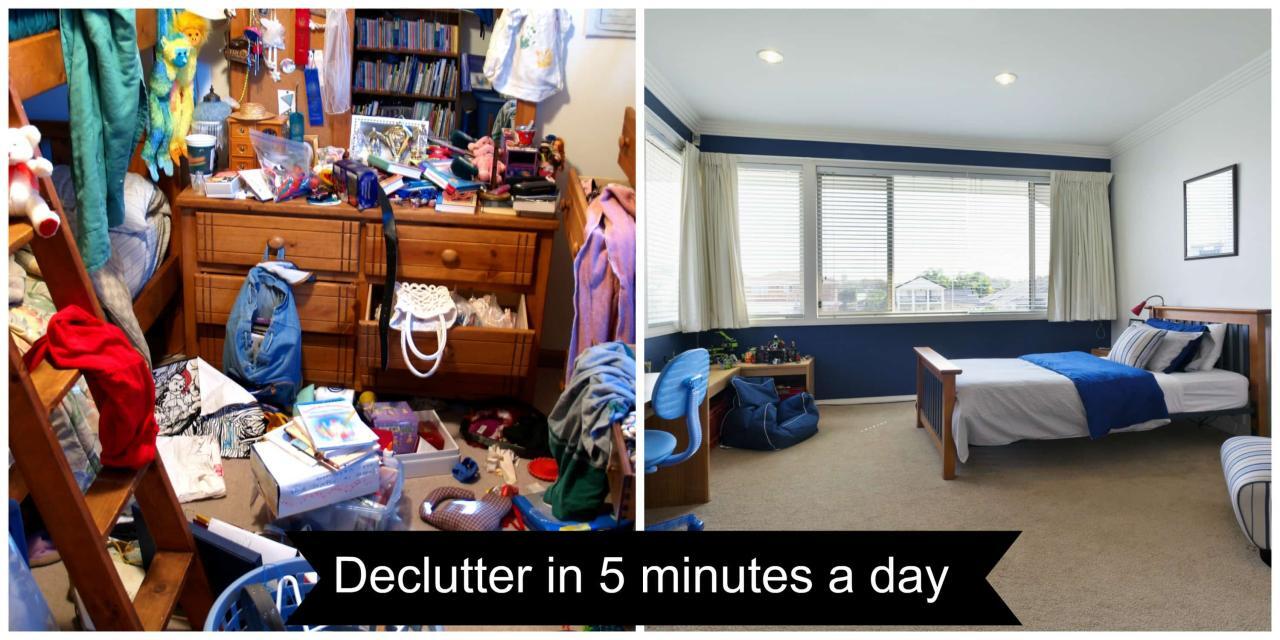
After successfully decluttering your home over a weekend, the key challenge becomes maintaining the newly organized environment. Developing sustainable habits and routines is essential for preventing clutter from returning. By implementing simple strategies and utilizing resources dedicated to minimalism and organization, you can enjoy a serene and orderly living space.Establishing habits that promote a clutter-free environment requires consistent effort and dedication.
By setting up daily routines and leveraging available tools, you can ensure that the clutter does not re-accumulate. Here are some effective techniques to help maintain your decluttered space:
Daily Routines for Sustaining Order
Creating daily habits that promote tidiness is crucial. These routines should be manageable and easily integrated into your lifestyle to encourage long-term success. Here are several routines that can be adopted:
- The One In, One Out Rule: For every new item you bring into your home, commit to removing one item. This practice helps keep the balance and prevents accumulation.
- Five-Minute Tidy: Dedicate five minutes each day to quickly tidy up spaces that tend to gather clutter, such as countertops or desks. This small investment of time can lead to significant cleanliness.
- End-of-Day Reset: Before going to bed, take a few moments to put away any items that are out of place. This helps you start each day with a fresh slate.
- Weekly Decluttering Sessions: Schedule a short decluttering session each week to review spaces and eliminate items that are no longer needed or used.
Implementing these routines can significantly contribute to sustaining a decluttered space and make it easier to maintain an organized lifestyle.
Utilizing Resources for Ongoing Organization
To support your decluttering efforts, various resources are available that focus on minimalism and organization. Leveraging these tools can provide ongoing motivation and guidance. Here are some noteworthy resources:
- Books on Minimalism: Titles such as “The Life-Changing Magic of Tidying Up” by Marie Kondo or “Essentialism: The Disciplined Pursuit of Less” by Greg McKeown offer valuable insights and strategies for living minimally.
- Apps for Organization: Applications like Todoist or Evernote can assist in keeping track of tasks and maintaining organization systems.
- Online Communities: Joining forums or social media groups focused on minimalism and organization can provide support and inspiration from like-minded individuals.
- Workshops and Classes: Participating in local workshops or online courses on organization and decluttering can offer practical skills and techniques for maintaining order.
These resources not only provide practical tips but also help foster a mindset oriented towards simplicity and order.
“Minimalism is not about having less, but about making room for more of what matters.”
Incorporating these techniques and resources will enable you to maintain a decluttered space, promoting a lifestyle that values simplicity and mindfulness.
Summary
In conclusion, the journey of decluttering your entire house in a weekend is not just about tidying up; it is an opportunity to create a more organized and harmonious living environment. By implementing the strategies discussed, you will not only clear out unwanted items but also cultivate lasting habits that prevent future clutter. Remember, the effort you invest in this process will yield profound benefits, enhancing both your home and overall well-being.